Thursday, 6 February 2014

Welcome to Contexts!

In this blog, I will be talking about four different types of learning contexts within education. These contexts are slightly different from the normal layout of school which children undertake. 

The different sorts of contexts are different from the next. They all have one thing in common: teaching children. 

The different contexts have different approaches into how this should be done but all have the child at the centre of this. 


Foundation Phase

The Foundation Phase is a system which is for ages 3-7 years old in Wales, United Kingdom. The main focus of this phase is for children to learn through play and the physical doing of an activity rather than sit down lessons.


The system came about by looking into other educational systems to be able to form the best system possible- combining all the best parts of the other systems into one. Children benefit from the fact that they aren't having to do the reading and writing aspect of things.
There are some key points which helps the children to grow and develop in different ways. These different forms are as below;
  • “skills and understanding
  • personal, social, emotional, physical and intellectual well being so as to develop the whole child
  • positive attitudes to learning so that they enjoy it and want to continue
  • self-esteem and self-confidence to experiment, investigate, learn new things and form new relationships
  • creative, expressive and observational skills to encourage their development as individuals with different ways of responding to experiences


The great thing about these points is that it is helping the child to grow as a person before they are forced into the working/school life without having the self-confidence or practice that they require to be able to understand certain things in particular areas of work. 

The foundation phase also focuses on building up the bond between the child and the teacher. This is important as the child needs to understand the building blocks of communication with the person who is going to teach them what they require.


Motessori Education

"Never help a child with a task at which he feels he can succeed." – Maria Montessori

I think that is such a wonderful quote to open on! It's saying: children can do things, just give them a chance and stop treating them like they are stupid or something.

 Maria Montessori was, of course, the beautiful mind behind this scheme of education in the world. She was around from 1870- 1952. She came up with this scheme of education so that those who were viewed as "ineducatable" could have the education that they both wanted and fully deserved. (Everyone has a right to education in my eyes!)


Montessori over came this issue of the struggles that they would be facing in such a fantastic manner, in actual fact, I wish I had been to a Montessori school for either my own learning or even find one now to observe- it would be an experience worth living, I think.

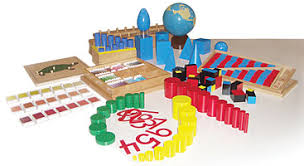
There are many different areas which are taught in the Montessori department-
1. Maths- as much as we may hate it, it is required in our everyday lives somewhere
2. Understanding the different cultures around the world
3. Practical life skills- like cooking!
4. Creativity

Children can be taught and learn in many different ways. In this approach, the main way is to observe the children and their doing. By allowing them to try new and master old skills, it helps them become extremely independent from such a young age. 


This could be seen as a bad thing as parent's want to do most things for their child, it's nature, everyone has it in them. But by allowing the child to be independent from an early age it can give them more freedom as well as setting them up for life from the moment they master the skills they require.

References!

http://www.forestschools.com/what-happens-at-a-forest-school/
Accessed on: 30/1/2014

http://www.youtube.com/watch?v=VrDkTm8eqAg
Accessed on: 30/1/2014


http://www.steinerwaldorf.co.uk/whatissteinereducation.html
Accessed on: 1/2/2014

https://www.google.co.uk/search?hl=en&site=imghp&tbm=isch&source=hp&biw=1366&bih=640&q=Rudolph+Steiner&oq=Rudolph+Steiner&gs_l=img.3..0i10l10.14245.22972.0.23278.24.18.4.2.2.0.187.1758.10j8.18.0....0...1ac.1.32.img..0.24.1870.h0obcxH_p4A#facrc=_&imgdii=_&imgrc=oZwr3n2KxvgwMM%253A%3BqeZDj7s6eRApQM%3Bhttp%253A%252F%252Fwww.kronosofia.dk%252Fframes%252Fside%252Fbiblioteket%252Fokkultordbog%252Fartikler%252Fsteiner%252Frs2.jpg%3Bhttp%253A%252F%252Fwww.kronosofia.dk%252Fframes%252Fside%252Fbiblioteket%252Fsteiner%252FSteinerbib.html%3B204%3B250
 Accessed on: 1/2/2014

http://transparentwithmyself.wordpress.com/2012/03/15/happy-excited-cant-sleep/
 Accessed on:  1/2/2014

http://www.dailymontessori.com/montessori-theory/
Accessed on: 2/2/2014

https://www.google.co.uk/search?hl=en&site=imghp&tbm=isch&source=hp&biw=1366&bih=640&q=children+with+independence&oq=children+with+independence&gs_l=img.3...898.11312.0.11501.28.13.2.13.14.0.162.1308.4j9.13.0....0...1ac.1.32.img..11.17.1272.9CrhbbWYncM#facrc=_&imgdii=_&imgrc=3_NJ8z_S6UpBmM%253A%3BwYjT7RVQ0W_XWM%3Bhttp%253A%252F%252Flittleninjaturtles.files.wordpress.com%252F2013%252F03%252Fpreparing-children-for-independent-life.jpg%3Bhttp%253A%252F%252Flittleninjaturtles.wordpress.com%252F%3B550%3B637
Accessed on: 2/2/2014

https://www.google.co.uk/search?hl=en&site=imghp&tbm=isch&source=hp&biw=1366&bih=640&q=children+with+independence&oq=children+with+independence&gs_l=img.3...898.11312.0.11501.28.13.2.13.14.0.162.1308.4j9.13.0....0...1ac.1.32.img..11.17.1272.9CrhbbWYncM#hl=en&q=montessori+materials&tbm=isch&facrc=_&imgdii=_&imgrc=gEJ6fw4XlMZh7M%253A%3B13NLaCcT0J9qlM%3Bhttp%253A%252F%252Fwww.a2zmontessori.com.au%252Fimages%252Fmontessori-products.jpg%3Bhttp%253A%252F%252Fwww.a2zmontessori.com.au%252F%3B367%3B200
Accessed on: 2/2/2014

https://www.google.co.uk/search?hl=en&site=imghp&tbm=isch&source=hp&biw=1366&bih=640&q=children+with+independence&oq=children+with+independence&gs_l=img.3...898.11312.0.11501.28.13.2.13.14.0.162.1308.4j9.13.0....0...1ac.1.32.img..11.17.1272.9CrhbbWYncM#hl=en&q=right+to+education&tbm=isch&facrc=_&imgdii=2RHbGf7Yyr03bM%3A%3BkQXgVUiizlv2qM%3B2RHbGf7Yyr03bM%3A&imgrc=2RHbGf7Yyr03bM%253A%3B5Lb7FiYQb-JXUM%3Bhttp%253A%252F%252Fwww.design21sdn.com%252Fattachments%252F0026%252F1833%252Fck_03_282_.jpg%25253F1218154480%3Bhttp%253A%252F%252Fwww.design21sdn.com%252Forganizations%252F339%252Fposts%252F2277%3B282%3B423
Accessed on: 2/2/2014


https://www.google.co.uk/search?hl=en&site=imghp&tbm=isch&source=hp&biw=1366&bih=640&q=foundation+phase&oq=foundation+pha&gs_l=img.3.0.0l8j0i24l2.1695.6582.0.7673.14.11.0.3.3.0.185.1092.8j3.11.0....0...1ac.1.34.img..1.13.1054.f2JyjmLFVmA#facrc=_&imgrc=6dEuLO9jQmdr-M%253A%3B8oJV6SioM169nM%3Bhttp%253A%252F%252Ffoundationphase.powys.gov.uk%252Fimages%252FFrom%252520old%252520site%252Fclipboard01.jpg%3Bhttp%253A%252F%252Ffoundationphase.powys.gov.uk%252F%3B255%3B255
  Accessed on: 3/2/2014


http://wales.gov.uk/topics/educationandskills/earlyyearshome/foundation_phase/?lang=en
 Accessed on: 3/2/2014

Sunday, 2 February 2014

Steiner Schooling


Rudolph Steiner was the man behind the beginnings of Steiner education. It has since developed since Steiner died in 1925- education has come along an awful lot since he passed away!

The main goal of the Steiner school’s is that they want to help the child to become excited about their educational life. After all, if a child is happier with their learning they are more likely to learn more and have a genuine interest in the different subjects taught to them over the years.

The principles which are put into practice within the Steiner education system are completely different to main stream schools. The Steiner school would take into account the whole entire person; rather than the child being a head or a number for more money within the school.

This means that the child will have their spiritual, emotional, educational and physical needs met to the highest point possible. The staff will ensure that if there are any issues with a pupil, they are there to help and support them so that they can benefit as much as they can from their time within the school.

Below is a video explaining what a Steiner school is. Most of the children who have comments about the school only have positive views. My personal favourite is that they allow the children to actually be children rather than treat them like adults. By giving them the chance to be children, it allows them to develop as a person fully.


Most subjects will link in together in some form. Even through A-Level studying, they have their selected subjects and then do particular additional lessons for a set time at the beginning of each day. This allows them to develop the knowledge they are taking in for their subjects even more.


It would however, be advised that if you haven’t been in a Steiner school and suddenly decide that you want to attend one, don’t. This is only because the way in which the studies are completely vary from how it is done in other schools. Once you start in a Steiner school, it is best to stick your education out there.